
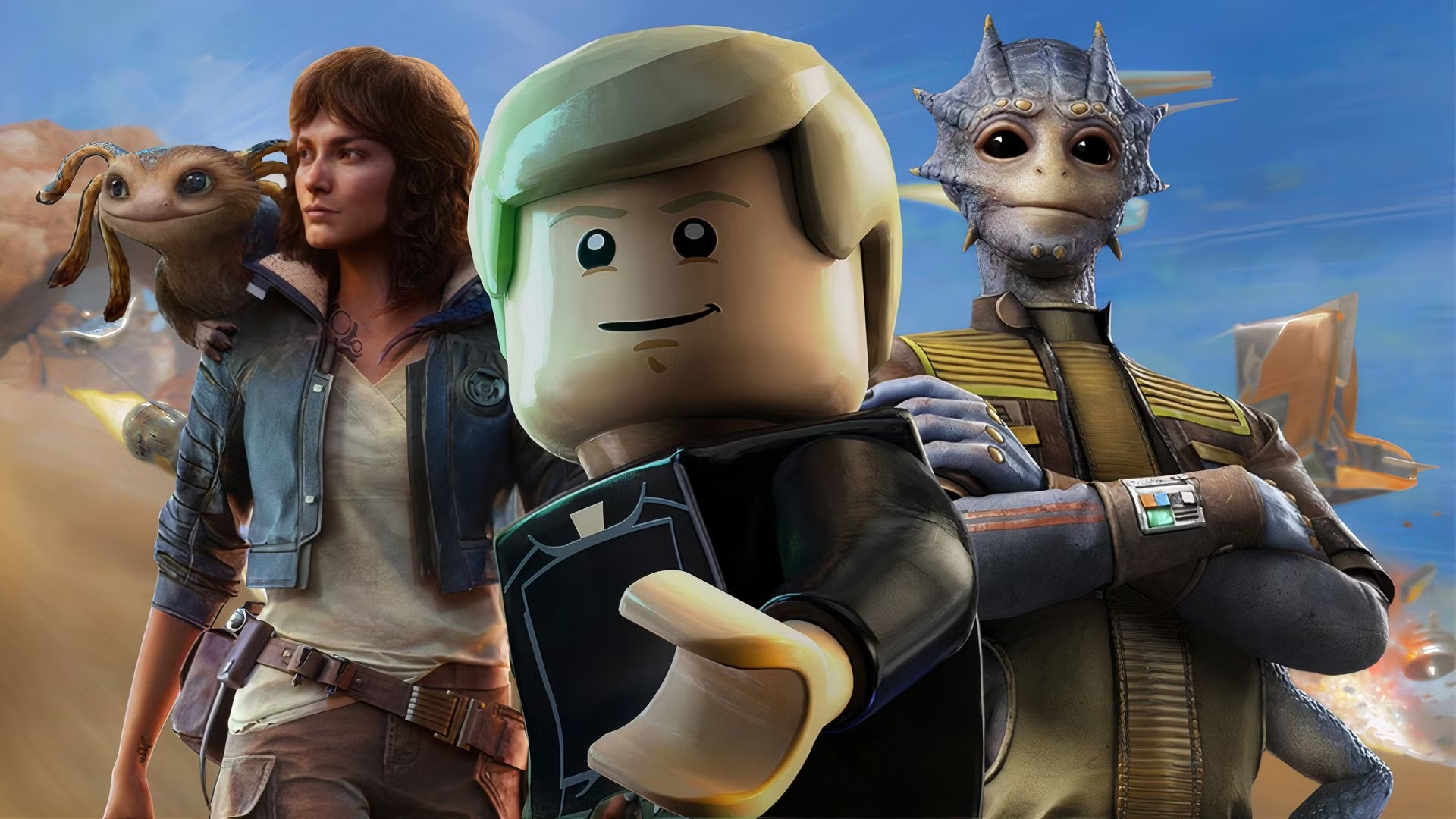
Star Wars games have spent decades letting us swing lightsabers and command fleets, but the galaxy far, far away gets a lot more interesting when you step off the battlefield and into the cantina. A new roundup highlights nine titles that actually bother to simulate what it's like to live in this universe — whether you're scraping by as a scavenger, running a criminal syndicate, or just trying to keep your ship from falling apart mid-hyperspace jump.
The Games That Treat Star Wars Like a Place, Not a Backdrop

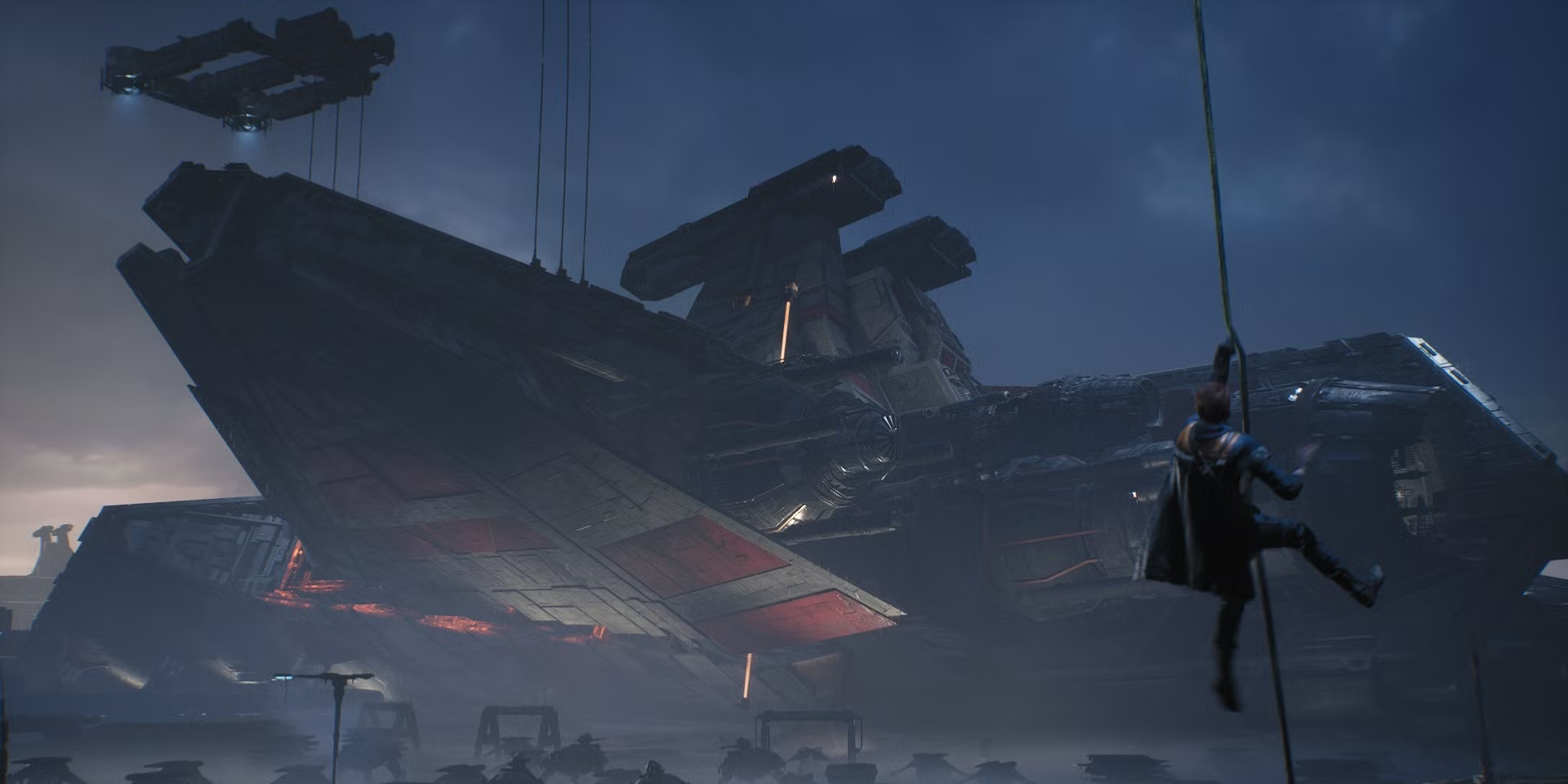
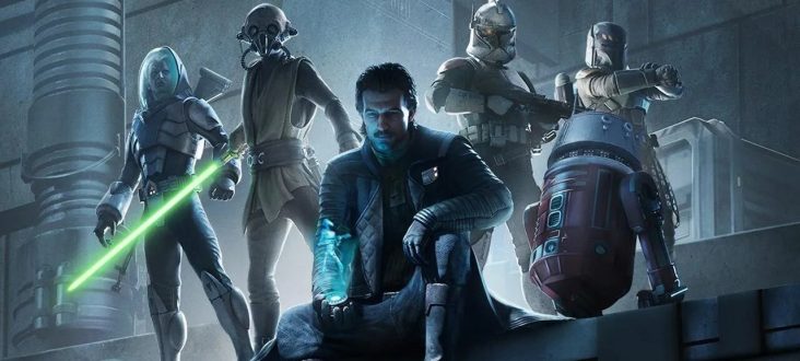
The list spans genres and eras, but the throughline is consistent: these games care about the texture of daily existence in a setting usually defined by destiny and prophecy. Star Wars Jedi: Fallen Order opens the conversation with Cal Kestis picking through the junkyards of Bracca, a sequence that feels more like industrial archaeology than Jedi fantasy. You're cutting up derelict Venators for parts, dodging corporate security, and navigating a world where the Empire's reach is measured in salvage quotas and shift schedules.
That grounded perspective carries into Star Wars Jedi: Survivor, where Koboh's settlement of Rambler's Reach functions as an actual community — prospectors, mechanics, and a saloon run by a former clone trooper all coexisting in a way that feels lived-in. The game lets you tend a garden, recruit NPCs with their own routines, and watch the town grow as you progress. It's the closest a modern action game has come to simulating a Star Wars neighborhood.
Scoundrels, Smugglers, and the Gig Economy

Star Wars Outlaws builds its entire premise around this angle. Kay Vess isn't chosen by the Force; she's a small-time operator trying to pull one big score to clear a debt. The game's reputation system with syndicates like the Pyke Syndicate, Crimson Dawn, and the Hutt Cartel turns faction politics into a daily grind of contracts, betrayals, and territory management. You're not saving the galaxy — you're navigating its criminal underbelly one job at a time.
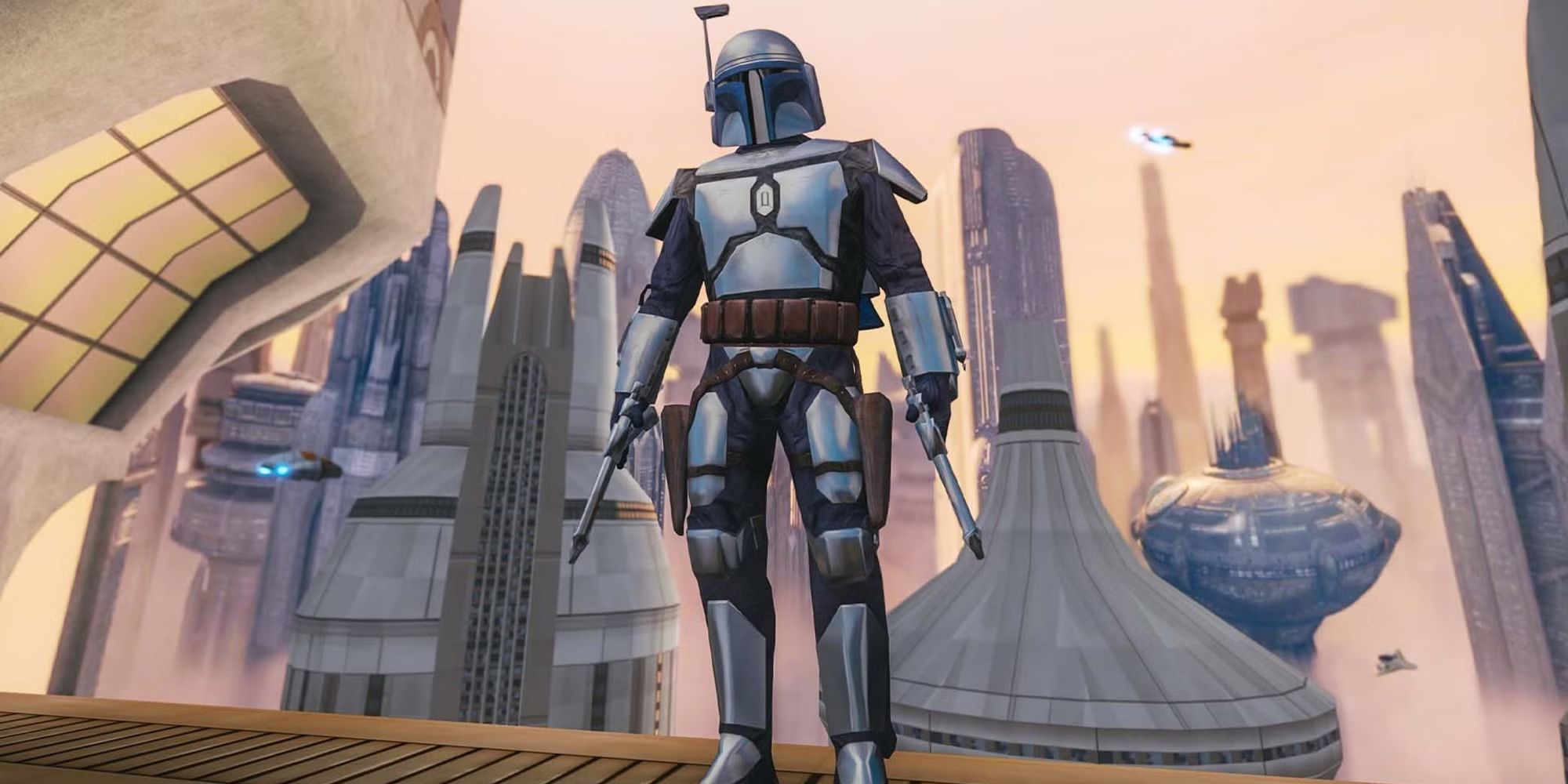
Star Wars: Bounty Hunter did this two decades earlier, putting you in Jango Fett's armor for a working-stiff tour of the profession. The bounties aren't epic confrontations — they're skip traces, stakeouts, and the occasional bar fight. The game understands that bounty hunting is mostly paperwork and travel, punctuated by violence.
The MMOs That Built Societies
No conversation about everyday Star Wars life is complete without Star Wars Galaxies. The pre-CU version let players be moisture farmers, image designers, musicians, and architects — entire professions with zero combat relevance. Cantinas filled with player dancers healing "mind wounds" through choreographed routines. Player cities rose and fell based on zoning, elections, and supply chains. It was a virtual society that happened to exist in the Star Wars universe, and nothing since has matched its ambition.
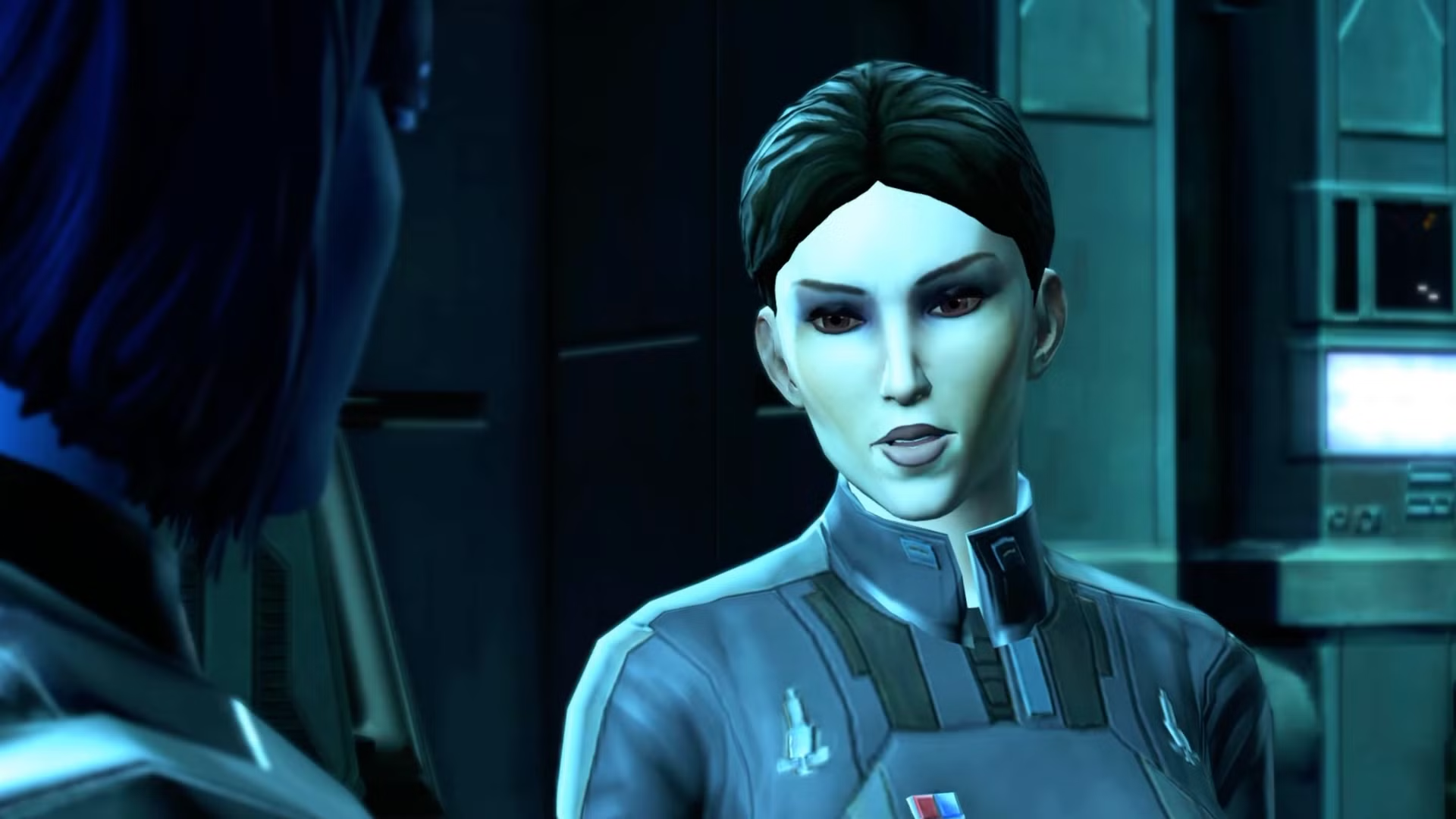
Star Wars: The Old Republic carries that torch differently. Its eight class stories include the Smuggler and Imperial Agent — narratives built around politics, heists, and intelligence work rather than Force mysticism. The game's strongholds and legacy systems let you build a life across characters, decorating apartments on Nar Shaddaa or Tatooine with trophies from your career.
Military Life Without the Mythos
Star Wars: Republic Commando strips away the Jedi entirely. You lead Delta Squad — four clone troopers with distinct personalities, banter, and a chain of command that feels military rather than heroic. The game's brilliance is in the downtime: squadmates arguing over rations, discussing the war's morality, treating combat as a job with terrible hours and worse benefits. It reframes the Clone Wars as a workplace drama with blasters.
Star Wars: Squadrons applies that same energy to starfighter pilots. The campaign alternates between New Republic and Imperial perspectives, but the multiplayer is where the "everyday" emerges — learning your ship's systems, coordinating with a wingmate, managing power distribution mid-dogfight. It's a blue-collar space job simulator wrapped in a competitive shooter.
The Unexpected Entry
LEGO Star Wars: The Skywalker Saga earns its spot through sheer density. Its free-play mode turns every film location into an explorable sandbox where you can swap between hundreds of characters — Jawas, Gungans, Dexter Jettster, a random protocol droid — and just exist in Mos Eisley or Coruscant. The game's humor masks a genuine affection for the setting's mundane corners: the moisture vaporators, the podracer repair bays, the background aliens going about their business.

Why This Shift Matters Now
The industry's pivot toward these perspectives isn't accidental. After years of "chosen one" narratives dominating licensed games — a trend Star Wars itself codified with The Force Unleashed and its sequels — developers are realizing the setting's longevity depends on making the galaxy feel inhabitable. Disney's streaming shows (The Mandalorian, Andor) proved audiences will watch ordinary people navigate extraordinary circumstances. Games are catching up.
There's also a mechanical reason: systems-driven gameplay (reputation, economy, crafting, housing) retains players better than linear power fantasies. A Jedi fantasy ends when the credits roll. A life in the galaxy — even a virtual one — creates its own reasons to return.
Where the Illusion Breaks
The counterpoint is unavoidable: most of these games still funnel you toward combat and spectacle. Survivor's garden is lovely, but it's a side activity in a game about lightsaber duels. Outlaws wants you to feel like a scoundrel, but its open world still populates itself with enemy camps to clear. The Old Republic lets you play a smuggler, then sends you to save the galaxy by level 20. The "everyday life" framing often sits awkwardly atop blockbuster structures that demand escalation.
And Galaxies — the one game that truly committed — was shut down in 2011. Its spiritual successors remain niche or unrealized.
What Comes Next
The trajectory points toward more hybridization. Outlaws' post-launch updates and The Old Republic's ongoing expansions suggest publishers see value in deepening these systems rather than abandoning them. Rumors of a Galaxies successor — or at least a survival-crafting game in the vein of No Man's Sky but with Star Wars IP — persist for a reason. The fantasy of living in this universe, not just saving it, has never been stronger.
For now, these nine games represent the high-water marks. They're not perfect simulations, but they prove the galaxy far, far away has room for more than destiny. Sometimes it just has room for a shift at the cantina, a hyperdrive that needs tuning, and a paycheck that never quite covers the repairs.



Comments (0)
Loading comments…